
Today is Orthodox Easter. Western churches celebrated Easter last week. Why are the Eastern and Western dates of Easter different? Is Eastern Easter always later than Western Easter? How far apart can the two dates be?
Why the dates differ
Easter is on the first Sunday after the first full moon in Spring. East and West agree on this. What they disagree on is the details of “full moon” and “Spring.” The dates are not based on precise astronomical measurements but rather on astronomical approximations codified long ago.
Spring begins on March 21 for the purposes of calculating Easter. But the Western church uses March 21 on the Gregorian calendar and the Eastern church uses March 21 on the Julian calendar. This mostly accounts for the difference between Eastern and Western dates for Easter. East and West also use slightly different methods of approximating when the moon will be full.
Pascha never comes before Easter
The Eastern name for Easter is Pascha. Eastern Pascha and Western Easter can occur on the same day, but otherwise Pascha is always later, never earlier. This is because the Julian year is longer than the Gregorian year, causing fixed dates on the former calendar to occur after the later. Also, the Eastern method of approximating the date of the Paschal full moon gives a later date than the Western method.
The Julian calendar has exactly 365 1/4 days. The Gregorian calendar has 365 97/400 days; centuries are not leap years unless they’re divisible by 4. This complication in the Gregorian calendar was necessary to match the solar year. The date March 21 on the Julian calendar is drifting later in the year from the perspective of the Gregorian calendar, moving further past the astronomical equinox [1].
Size of the gap
Eastern and Western dates of Easter can coincide. The were the same last year, and will be the same again in 2028. The gap is always an even number of weeks because Easter is always on a Sunday.
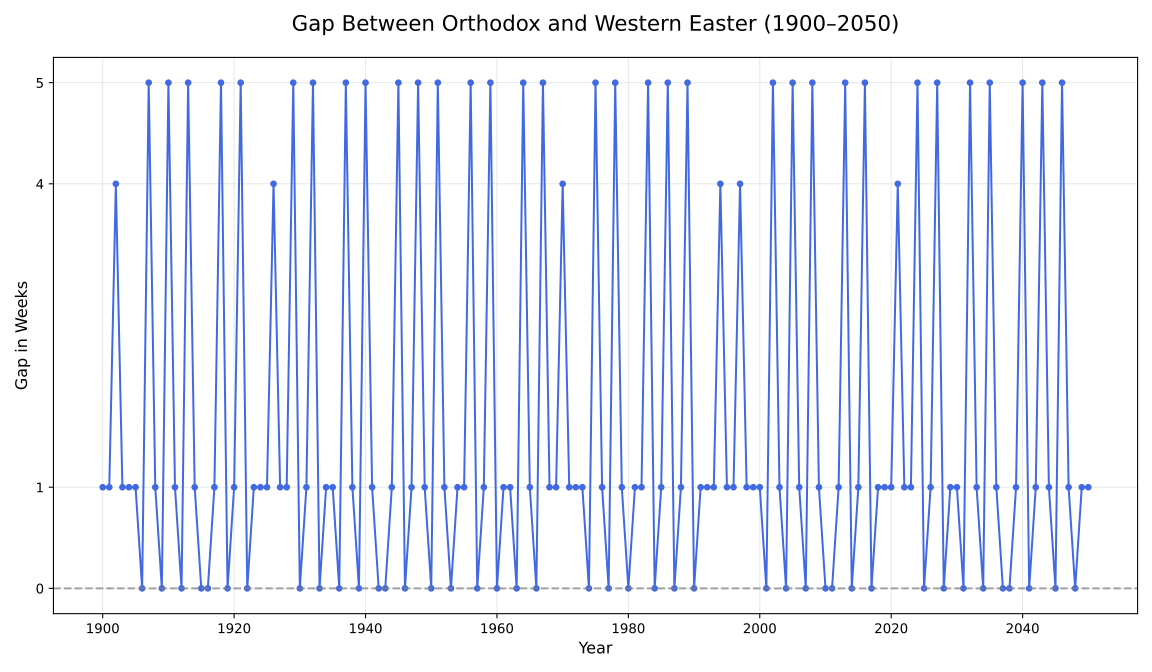
The gap is usually 1 week. It can be 0, 4, or 5 weeks, but never 2 or 3 weeks.
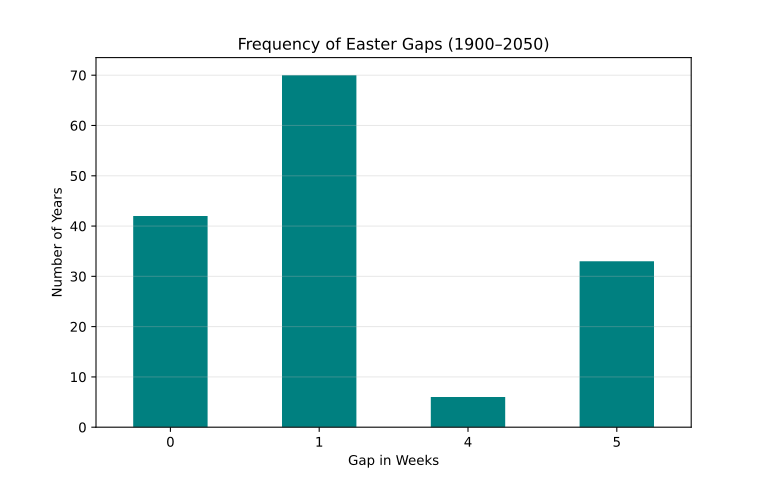
This is the pattern for now. Sometime in the distant future the Julian and Gregorian calendars will diverge further than the gaps will increase. Presumably Orthodox churches will make some sort of adjustment before the Julian date March 21 drifts into summer or fall.
Related posts
[1] The Julian and Gregorian calendars currently differ by 13 days, and they’re drifting apart at the rate of 3 days every 400 years. Somewhere around 47,000 years from now the two calendars will agree again, sorta, because the Julian calendar will be a full year behind the Gregorian calendar.